
Leadership Transition in the UCSF Institute for Neurodegenerative Diseases
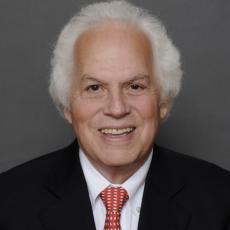 After nearly three decades of visionary leadership, pioneering scientific discovery, and unwavering commitment to advancing our understanding of neurodegenerative disease, Stanley B. Prusiner, MD will step down as director of the UCSF Institute for Neurodegenerative Diseases (IND), effective June 30, 2026.
Dr. Prusiner founded the Institute for Neurodegenerative Diseases in 1998 following his groundbreaking discovery of prions, work that earned him the 1997 Nobel Prize in Physiology or Medicine. His discovery transformed scientific understanding of infectious and neurodegenerative diseases and opened entirely new avenues of research. Under his leadership, the institute has become a world-renowned center for neurodegenerative disease research, helping establish UCSF as a global leader in the field. The institute has brought together scientists from diverse disciplines to advance understanding of diseases including Parkinson’s disease, Alzheimer’s disease, frontotemporal dementia, and prion diseases.
Although stepping down from his administrative role, Dr. Prusiner will remain a full faculty member at UCSF and continue to lead an active research program. He plans to devote his full attention to advancing his scientific work, particularly efforts to develop new therapies for Parkinson’s disease. At a moment when his laboratory is making significant progress, he is eager to focus his time and energy on translating discoveries into treatments that can benefit patients.
Beginning July 1, 2026, Jason Gestwicki, PhD, will serve as interim director while a national search is conducted.
As interim director, Dr. Gestwicki will provide leadership for the institute and continue advancing its mission of accelerating discoveries that improve the lives of patients affected by neurodegenerative disease. A professor in the Department of Pharmaceutical Chemistry and a member of the IND since 2012, Dr. Gestwicki is an internationally recognized researcher whose work focuses on translating basic biological discoveries into therapies for neurodegenerative disorders. As a highly respected scientist and collaborative leader who understands both the scientific opportunities and the culture that have made the IND so successful, I am grateful for his willingness to serve during this transition and help guide the institute into its next chapter.
The UCSF School of Medicine extends its deepest gratitude to Dr. Prusiner for his remarkable leadership, scientific vision, and enduring contributions to UCSF and the broader biomedical community. Few scientists have had such a profound impact on our understanding of human disease. His passion for discovery and determination to improve patients’ lives continue to drive his research, and we look forward to the breakthroughs that will emerge from this next chapter of his work.